
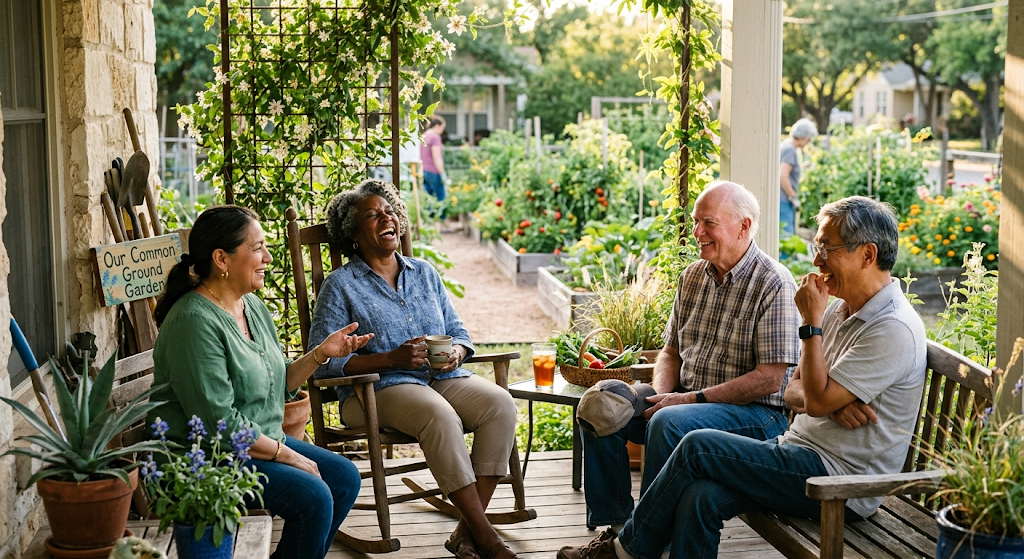
Most families in Central Texas want the same thing for their aging parents: to help them stay in their own homes, safely and comfortably, for as long as possible. It is called aging in place, and it is absolutely achievable here. What makes it hard is not a lack of help. The Austin area is rich with programs, nonprofits, and services built for exactly this. The hard part is that almost no one knows they exist until they are deep in a crisis, scrambling to find support they could have lined up months earlier.
This guide is here to fix that. Consider it a map to the local resources that help Central Texas seniors stay independent at home, organized by the kind of help you might need. Whether your family is in Austin proper, out in Williamson County, or in Bastrop, these are the organizations worth knowing before you need them. Bookmark this, share it with a sibling, and keep it handy. A little knowledge now can spare you a great deal of stress later.
A quick note: programs, phone numbers, and eligibility rules change, so it is always worth confirming current details directly with each organization before you rely on them.
Start Here: The Navigation Hubs
When you do not know where to begin, these are the front doors. One call to any of them can open the way to many of the services below.
Area Agency on Aging of the Capital Area (AAACAP). This is the single most important resource to know. Operated through the Capital Area Council of Governments (CAPCOG), it serves a ten-county region that includes Travis, Williamson, and Bastrop. AAACAP provides information and referral, benefits counseling (including help understanding Medicare and Medicare Part D), caregiver support, and coordination of services like meals and transportation. Its staff can help you sort through options and point you toward the right programs, and services are available in English and Spanish. You can reach them at 512-916-6062 or 888-622-9111.
The Aging and Disability Resource Center (ADRC) of the Capital Area. Closely tied to AAACAP, the ADRC is designed as a single access point for long-term services and supports for older adults, people with disabilities, and their caregivers. If you are trying to understand what benefits and programs your parent might qualify for, this is a natural starting place.
2-1-1 Texas. Simply dial 211 from any phone, any time, to reach a free statewide information line for health and human services. It can connect you to local resources for food, housing, transportation, and more.
Austin Senior Services Hub (Austin Public Health). The City of Austin maintains a hub of resources for local seniors covering healthcare access, home repair assistance, food services, transportation, and activities. It is a useful starting point for city residents.
Meals and Nutrition
Good nutrition keeps seniors healthier and more independent, and a daily meal delivery often doubles as a wellness check.
Meals on Wheels Central Texas. A cornerstone of the community since 1972, this organization delivers thousands of hot, healthy meals to homebound older adults across the Greater Austin area every weekday, along with a friendly safety check at the door. Its work goes well beyond food: additional programs include minor and major home repairs, grocery assistance, shelf-stable grocery supplies, veteran services, pet care assistance, respite support for families caring for someone with dementia, and even telehealth for depression. For many families, this is one of the most valuable resources on this entire list.
Meals on Wheels Rural Capital Area. Run through Combined Community Action, this program serves seniors in the more rural counties around Austin, including Bastrop, delivering nutritious meals with wellness checks to homebound older adults 60 and up. Meals are provided on a voluntary donation basis, and because demand is high, it is wise to inquire early.
Congregate meal sites. For seniors who are still able to get out, community meal sites (often at senior centers and supported through AAACAP and local partners) offer a hot lunch plus something just as important: company. Combating isolation is part of the point.
Transportation
Losing the ability to drive is one of the biggest threats to independence, and to social connection. Several local programs exist to keep seniors mobile.
Drive a Senior. A beloved local institution founded in 1985, Drive a Senior provides free rides and friendly, door-to-door companionship to help Central Texas seniors get to appointments, run errands, and stay connected. In recent years several longstanding volunteer driver groups unified under this organization, strengthening its reach across the region. In the Georgetown and Round Rock areas, the Faith in Action and Drive a Senior programs serve Williamson County seniors, reachable at 512-868-9544 (Georgetown) and 512-310-1060 (Round Rock).
City of Austin Senior Transportation (Parks and Recreation). For over three decades, the city has operated a senior transportation program offering rides to medical appointments, senior meal sites, and errands like groceries and the bank, within Austin city limits, for residents 60 and older. Fees are minimal or by donation.
CapMetro Access. Austin’s public transit authority operates a paratransit service for riders who cannot use regular fixed-route buses due to a disability. It is worth exploring eligibility if standard transit is not an option.
CARTS (Capital Area Rural Transportation System). For families in the more rural parts of the metro, including Bastrop County, CARTS provides accessible transportation, including medical transportation connected to certain Medicaid programs.
Caregiver Support and Respite
Family caregivers need support too, and these organizations exist specifically to provide it.
AGE of Central Texas. Serving the community since 1986, AGE is a cornerstone of support for older adults and the families who care for them, with a genuinely impressive range of free and low-cost programs. These include Adult Day Health Centers in Austin and Round Rock (which give caregivers a safe, engaging place for their loved one during the day and a much-needed break), the CaregiverU program of free training courses, an Early Memory Loss Support Program, peer-based computer classes, and a Health Equipment Lending program that loans out wheelchairs, walkers, shower benches, and other equipment at no cost. That equipment closet alone can save families hundreds of dollars.
Family Eldercare. This nonprofit focuses on dignity and stability for older adults and adults with disabilities, offering services such as money management, guardianship, counseling, service coordination, and support with housing. It also runs the well-known Summer Fan Drive, distributing free fans to vulnerable older neighbors during the dangerous Texas heat, and Lifetime Connections Without Walls, a phone-based program that connects isolated seniors. Services are offered in English and Spanish.
AAACAP caregiver support. Beyond its navigation role, the Area Agency on Aging administers caregiver support programs that can include respite funding, training, and counseling for eligible families. Worth asking about directly.
Dementia and Memory Care Support
A dementia diagnosis brings its own set of needs, and Central Texas has strong resources for families walking this road.
Alzheimer’s Association, Capital of Texas Chapter. This is the go-to resource for anyone facing Alzheimer’s or another dementia. It offers free education programs, in-person and virtual support groups, and care navigation, all backed by a 24/7 Helpline at 800-272-3900 that you can call any time, day or night, with questions or in a moment of crisis. The local chapter can also be reached at 512-592-0990.
AGE of Central Texas (noted above) deserves a second mention here for its Early Memory Loss Support Program and its adult day centers, both invaluable for families in the earlier and middle stages of memory loss.
Meals on Wheels Central Texas also offers respite support specifically for families caring for a loved one with dementia, providing precious breaks for exhausted caregivers.
Home Safety, Equipment, and Home Repair
Staying home safely sometimes means changing the home, or getting the right equipment into it.
For durable medical equipment like walkers, wheelchairs, and shower benches, the AGE of Central Texas lending closet is often the first place to try, since it provides these at no cost. For home repairs and modifications that affect safety, Meals on Wheels Central Texas operates home repair programs for qualifying clients, and the City of Austin offers home repair assistance for eligible residents through its senior services. And for the specific danger of Texas summers, Family Eldercare’s Summer Fan Drive helps older neighbors who cannot afford to stay cool. Pairing these with a professional home safety assessment (something a home health provider can help arrange) is a smart way to prevent the falls and hazards that so often end independence.
Financial, Benefits, and Legal Help
Navigating the financial side of aging is daunting, and free help exists.
The benefits counselors at AAACAP can help you understand Medicare, Medicaid, and other programs at no cost. For families exploring Medicaid-funded long-term care, Texas Health and Human Services administers the STAR+PLUS program, and getting on its interest list early matters because of long wait times in the Austin area. Family Eldercare offers money management and guardianship services for those who need help managing finances safely. And if you ever have concerns about the care a loved one is receiving in a nursing home or assisted living facility, the Long-Term Care Ombudsman program (accessible through AAACAP) advocates on behalf of residents.
A Quick County-by-County Note
While many of these organizations serve the whole region, here is the short version by county:
- Travis County (Austin and surrounding): the deepest concentration of services, including Meals on Wheels Central Texas, Drive a Senior, City of Austin senior programs, AGE of Central Texas, and Family Eldercare.
- Williamson County (Round Rock, Georgetown, Cedar Park, Leander): well served by AGE of Central Texas (with a Round Rock adult day center), Faith in Action and Drive a Senior in Georgetown and Round Rock, and the same regional AAACAP and Alzheimer’s Association support.
- Bastrop County: served by Meals on Wheels Rural Capital Area, CARTS transportation, and the regional AAACAP and ADRC. Networks are a bit thinner here, so starting your search early is especially wise.
Across all three, AAACAP and the ADRC serve as the regional backbone, so when in doubt, start there.
How Home Health Fits Into the Picture
All of these resources address important pieces of aging in place: meals, rides, equipment, caregiver relief, benefits. What ties them together, and what covers the medical side of staying home safely, is skilled home health care.
A home health provider does more than deliver clinical care. A good one becomes a hub of connection, helping families understand not just their medical options but the whole landscape of community support around them. Skilled nurses and therapists coming into the home are often the first to spot an unmet need, whether that is a nutrition gap, a fall risk, or a caregiver on the edge of burnout, and to point families toward the right local resource to fill it.
At Manifest Home Health, we see ourselves as part of this Central Texas community, not apart from it. We are proud to know these local organizations and to help the families we serve connect with them, because aging in place is a team effort, and no single service does it all. Our role is to bring skilled, compassionate care into the home and to help families stitch together everything else they need to keep a loved one thriving where they most want to be.
The Bottom Line
Aging in place in Central Texas is not only possible, it is well supported, if you know where to look. The resources are here: meals delivered daily, free rides to the doctor, loaner wheelchairs, caregiver classes, dementia helplines, benefits counselors, and more, much of it free or low-cost. The families who navigate aging most smoothly are simply the ones who learned what existed before they urgently needed it.
So take the first step today. Save this guide, make one introductory call to AAACAP or the ADRC, and start building your parent’s support network now, while there is no crisis forcing your hand. And if you would like help understanding how skilled home health care fits into your family’s plan, or which local resources might serve you best, reach out to us at Manifest Home Health. Helping Central Texas families age well at home is exactly what we are here for.
This article is for general informational purposes only. Programs, contact information, eligibility, and availability change over time, so please confirm current details directly with each organization. Listing an organization here is not an endorsement, and this guide is not a substitute for professional medical, financial, or legal advice.
 English