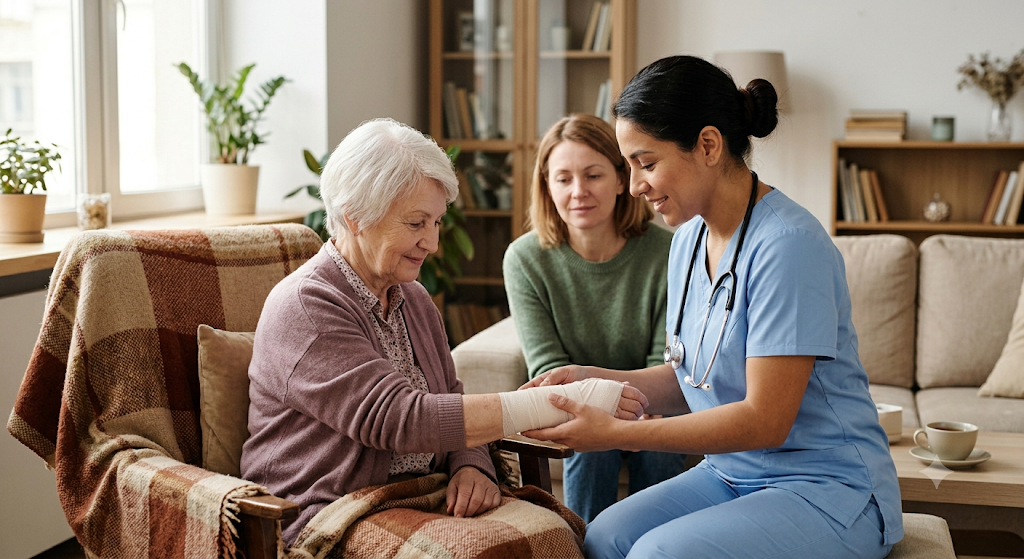
A wound does most of its healing at home. A nurse may visit a few times a week to assess it and change the dressing, but the other hundred-plus hours between those visits happen under your roof, in the care of family. What you do, and just as importantly what you avoid doing, during those hours has a real effect on whether a wound heals cleanly or turns into a serious problem.
That is a lot of responsibility to hand a family with no medical training, and it can feel intimidating. The good news is that the family’s job is not to be a wound care nurse. It is to be an informed, attentive partner: the daily eyes on the wound, the support system for healing, and the early warning system when something looks off. Those roles do not require a clinical degree. They require understanding, and that is exactly what this guide provides.
One essential note up front. This article explains how to support healing and recognize trouble. It is not a substitute for the specific instructions given by your nurse or doctor, and it is not a manual for performing complex wound care yourself. Deep, serious, or non-healing wounds need skilled professional care. Always follow your own care team’s plan first.
Your Role: The Nurse’s Partner Between Visits
It helps to understand where you fit. A skilled home health nurse handles the clinical work: assessing the wound, performing or directing dressing changes, and adjusting the plan with your doctor. Your role sits alongside that, and it is genuinely important.
As a family caregiver, you are the one who notices day-to-day changes the nurse cannot see between visits. You help keep the environment and the dressing clean and undisturbed. You support the whole-body conditions that healing depends on, like good nutrition and pressure relief. And you make the call when something looks wrong. Think of yourself not as a replacement for the nurse, but as their most valuable set of eyes and hands during all the hours they are not there.
Why Wounds Are Trickier in Older Adults
Understanding why senior wounds behave the way they do helps you take them as seriously as they deserve. Several factors work against fast healing in later life.
Skin becomes thinner and more fragile with age, tearing more easily and healing more slowly. Circulation is often reduced, and since blood delivers the oxygen and nutrients that repair tissue, poor circulation means slower healing. Chronic conditions complicate everything: diabetes in particular impairs healing and dulls sensation, so wounds can worsen unnoticed. Nutrition is frequently inadequate in older adults, depriving the body of the raw materials it needs to rebuild. And weaker immune function makes infection both more likely and more dangerous.
This is why a wound that a younger person might shrug off can become a significant medical issue for a senior. It is also why the supportive steps below matter so much.
The Common Types of Wounds You May Encounter
Families most often find themselves supporting healing for a few kinds of wounds. Surgical wounds follow an operation and usually heal predictably with good care. Pressure injuries, sometimes called bedsores or pressure ulcers, develop from sustained pressure on the skin, especially over bony areas, and are a major concern for anyone with limited mobility. Diabetic ulcers, often on the feet, are a serious complication of diabetes that require vigilant attention. Venous ulcers, usually on the lower legs, stem from poor circulation. And skin tears, common in fragile aging skin, can happen from even minor bumps.
Each type has its own nuances, which your care team will address, but the supportive principles that follow apply broadly across all of them.
The Pillars of Supporting Healing
Here is where families make the biggest difference. These are the foundations that give any wound its best chance.
Follow the care plan exactly. This is the first rule for a reason. Your nurse will give specific instructions about how and when the dressing is changed, what products to use, and what to watch for. Follow them precisely. Do not improvise, do not substitute products, and do not change the schedule based on how the wound looks to you. If something seems to warrant a change, call and ask rather than deciding on your own. Consistency is what modern wound healing depends on.
Keep it clean and protected. Infection is the enemy of healing, and simple cleanliness is your strongest defense. Wash your hands thoroughly before and after any contact with the wound or dressing. Keep the dressing clean and dry, and unless you have been instructed to change it, do not disturb it, since an intact dressing is protecting the wound. If a dressing becomes wet, soiled, or comes loose, that is usually a reason to follow your change instructions or call the nurse.
Fuel healing with nutrition and hydration. This is the pillar families most often overlook, and it is one of the most powerful. The body literally rebuilds tissue out of what it is fed, and healing demands more resources than usual. Protein is especially important, since it is the primary building block of new tissue, so encourage good sources at every meal. Vitamin C and zinc both play key roles in repair. Adequate calories overall matter, because a body that is undernourished will divert energy away from healing. And hydration keeps skin and tissue healthy and supports the whole process. If your loved one has a poor appetite or you are unsure about their nutrition, raise it with the care team, as this alone can stall or speed healing dramatically.
Relieve pressure and protect the area. For pressure injuries and diabetic foot ulcers especially, taking pressure off the wound is not optional, it is central to healing. A wound under constant pressure simply cannot close. This means repositioning, offloading, and protecting the area according to your team’s guidance, which brings us to the single most valuable thing many families can do.
Preventing and Managing Pressure Injuries
If your loved one spends much of the day in a bed or chair, pressure injury prevention deserves special attention, because these wounds are largely preventable and genuinely dangerous once they form. A few consistent habits make an enormous difference.
Reposition regularly. Shifting position relieves the sustained pressure that causes these injuries. A common guideline is to help reposition someone in bed roughly every two hours, and someone in a chair even more often, about every hour, but follow your care team’s specific recommendation. Set reminders so it does not get forgotten during a busy day.
Check the skin every day. Do a daily head-to-toe skin check, paying close attention to bony areas like the heels, hips, tailbone, elbows, shoulder blades, and the back of the head. You are looking for redness that does not fade when you press on it, along with any warmth, swelling, blisters, or breaks in the skin. Catching a pressure injury at the earliest stage, when the skin is only reddened, is far easier than treating an open sore.
Manage moisture. Skin that stays damp from sweat or incontinence breaks down quickly. Keep skin clean and dry, address incontinence promptly, and ask your team about barrier creams if moisture is an ongoing issue.
Reduce pressure with the right surfaces. Specialized mattresses, cushions, and padding can redistribute pressure. Small tools like a pillow to keep heels off the bed can prevent a serious wound. Your care team can advise on what fits the situation.
Keep the person moving when possible. Any safe movement or gentle activity your doctor approves helps, since movement improves circulation and reduces sustained pressure.
Signs of Infection: When to Call
This is the most important safety content in this guide. Infection can turn a manageable wound into a medical emergency, especially in an older adult, and early recognition saves real harm. Contact your nurse or doctor promptly if you notice any of these:
- Increasing redness, especially if it is spreading outward from the wound
- Increasing warmth around the area
- New or worsening swelling
- Increasing pain rather than the gradual improvement you would expect
- Pus or cloudy, colored drainage, or a foul odor
- The wound getting larger, deeper, or darker rather than better
- Red streaks extending away from the wound
- Fever, chills, or a general sense of feeling unwell
Some of these, particularly red streaking, a high fever, spreading redness, or your loved one seeming confused or very unwell, warrant urgent medical attention rather than waiting. When it comes to a possibly infected wound in a senior, it is always better to call too early than too late.
What Not to Do
Well-meaning families sometimes cause harm with outdated home remedies. Avoid these common mistakes:
- Do not use hydrogen peroxide or rubbing alcohol on a healing wound. These old standbys actually damage the new, fragile tissue the body is trying to build and can slow healing. Modern wound care has moved past them. Use only what your care team directs.
- Do not let a wound “dry out” on the belief that air heals it. Contrary to old wisdom, most wounds heal better in the moist, protected environment that proper dressings create. Follow your team’s dressing plan rather than exposing the wound.
- Do not remove or skip dressings against instructions. Peeking too often or leaving a wound uncovered can introduce infection and disrupt healing.
- Do not apply random creams, ointments, or home remedies. What helps one wound can harm another. Use only products your care team has approved.
- Do not ignore a wound that is not improving. A wound that stalls or worsens is telling you something. Report it rather than waiting and hoping.
When in doubt about any of this, the right move is always the same: call and ask rather than guess.
When Skilled Wound Care Is Essential
Wound care is a genuine clinical specialty, and some wounds absolutely require professional expertise to heal safely. Deep or large wounds, wounds that are not improving, surgical sites, pressure injuries beyond the earliest stage, diabetic ulcers, and any wound showing signs of infection all call for skilled nursing rather than family care alone.
This is precisely what home health wound care provides. A skilled nurse assesses the wound expertly, performs or directs the proper dressing changes with the right products, tracks healing over time, coordinates closely with your doctor, and adjusts the approach as the wound progresses. Many agencies also have nurses with specialized wound care training for complex cases. Just as valuable, that nurse teaches and supports the family, so that everyone is working from the same plan and no one feels they are guessing.
At Manifest Home Health, wound care is one of the areas where skilled nursing truly shows its worth. Our nurses bring clinical expertise directly into the home, manage wounds with proven methods, and partner with families so that healing happens safely and steadily. If you are caring for a loved one with a wound and feel unsure, that uncertainty is exactly the signal to lean on professional support.
The Bottom Line
Supporting a loved one’s wound healing at home comes down to a handful of things done consistently: follow the care plan exactly, keep everything clean, fuel the body with good nutrition and hydration, relieve pressure faithfully, and watch closely for the signs of infection that mean it is time to call. You do not need to be a clinician to do these things well. You need to be attentive, consistent, and willing to reach out when something looks wrong.
Healing is a partnership. The nurse brings the clinical skill, the body does the deep work of repair, and the family provides the daily care and vigilance that hold it all together. When those pieces work in concert, even a stubborn wound has its best possible chance to heal, right where your loved one most wants to be, at home.
This article is for general educational purposes only and is not a substitute for professional medical advice, diagnosis, or treatment. Always follow the specific wound care instructions of your physician and nursing team, and seek prompt medical attention for signs of infection or a worsening wound. Wound care needs vary widely by individual.
 English