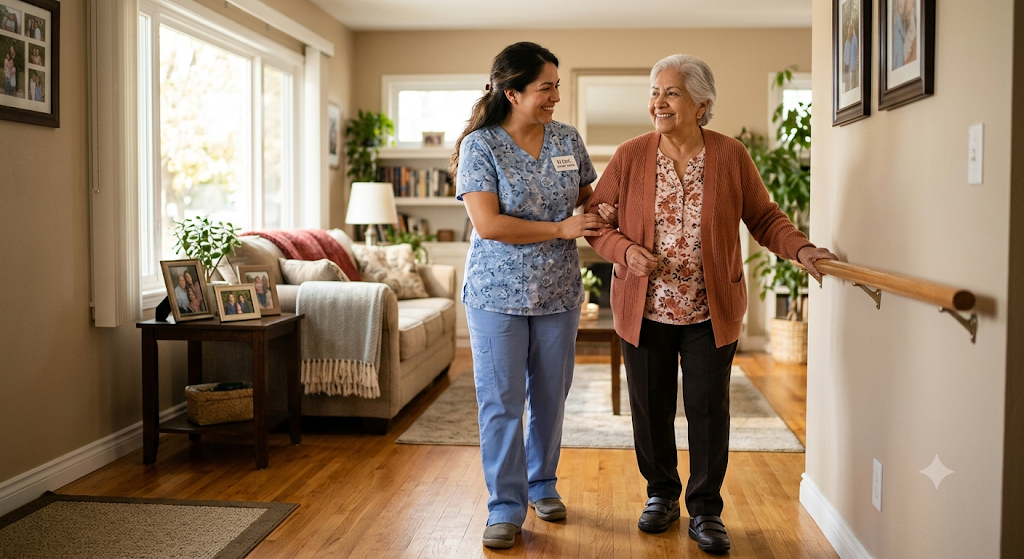
Ask most families to picture a serious health threat to an aging parent, and they imagine something dramatic: a heart attack, a stroke, a diagnosis delivered in a doctor’s office. Very few picture a throw rug. Yet for older adults, one of the single greatest risks to health, independence, and life itself is far more ordinary than any of that. It is a fall. Often at home. Often in a room the person has walked through safely ten thousand times before.
The numbers tell a sobering story. Roughly one in four adults over 65 falls each year, and falls are the leading cause of injury-related death in that age group. A single fall can fracture a hip, trigger a hospital stay, and set off a downward spiral from which some people never fully recover their independence.
Here is the part that should give every family hope: a very large share of these falls are preventable. Not with expensive equipment or major renovations, but with simple, often inexpensive changes to the home. The gap between a safe home and a hazardous one is frequently just a handful of adjustments most people never think to make.
This guide walks through those changes, room by room. Consider it a practical blueprint for turning a familiar home into a genuinely safe one, so that the place your parent loves most does not become the place that endangers them.
Why the Home Is Where Falls Happen
It seems backwards at first. The home is supposed to be the safest place there is. So why is it where most falls occur?
The answer is familiarity. We move through our own homes on autopilot, barely looking down, trusting a layout we have known for years. But bodies change while homes stay the same. Vision dims. Balance falters. Reflexes slow. Muscles weaken. The rug that was never a problem at 60 becomes a tripping hazard at 78, and the dim hallway that was merely cozy becomes genuinely dangerous.
The home does not have to change dramatically to become dangerous, and it does not have to change dramatically to become safe again. Small mismatches between an aging body and an unchanged environment are exactly what fall prevention is designed to correct. The good news is that once you learn to see a home the way a physical therapist does, the fixes tend to be obvious, affordable, and fast.
Let’s go room by room.
The Bathroom: Small Space, Highest Risk
If you make changes in only one room, make them here. The bathroom packs more fall risk into fewer square feet than anywhere else in the house. Hard surfaces, water, tight spaces, and the physically demanding motions of getting in and out of a tub or on and off a toilet combine into a genuinely hazardous environment.
Install grab bars. This is the highest-impact change you can make. Place sturdy, properly anchored grab bars beside the toilet and inside the shower or tub. A crucial point that families get wrong: a towel bar is not a grab bar. Towel bars are not built to hold a person’s weight and will pull straight out of the wall in the exact moment they are needed most. Grab bars must be screwed into wall studs or secured with proper anchors.
Add non-slip surfaces. Place non-slip mats or adhesive strips on the floor of the tub and shower, and a non-skid rug outside it so wet feet do not meet a slick floor.
Consider a shower chair and a handheld showerhead. Sitting to bathe removes the need to balance on a wet surface, and a handheld showerhead makes seated bathing practical.
Raise the toilet. A raised toilet seat, or a toilet safety frame with armrests, makes the up-and-down motion far safer for anyone with weak legs or hips.
The Stairs: Where Small Slips Become Serious Falls
Stairs turn a minor stumble into a major injury, because a slip on flat ground is a bruise while a slip on stairs is a tumble. Every staircase in the home deserves attention, including short flights and single steps that are easy to overlook.
Secure railings on both sides. Handrails should run the full length of every staircase, be firmly anchored, and ideally sit on both sides so there is always something to grab. Test every existing rail by pulling on it. A loose railing offers false confidence, which is worse than none at all.
Light the stairs well. Install switches at both the top and bottom of every staircase so no one ever has to cross stairs in the dark to reach a light. Motion-activated lighting removes the problem entirely.
Mark the edges. A strip of bright, high-contrast tape on the edge of each step helps aging eyes judge depth, which becomes harder with age and is a common cause of missteps.
Keep them clear. Stairs are not storage. Shoes, baskets, and stacked items waiting to go up or down are a serious hazard and need to find another home.
The Living Room and Hallways: Clearing the Everyday Path
These are the spaces a person crosses constantly, so the small hazards here get encountered again and again, every single day. That repetition is exactly why they matter.
Address rugs first. Loose throw rugs are one of the most common tripping hazards in any home. The safest move is often to remove them altogether. If a rug stays, secure it flat to the floor with double-sided tape or a non-slip pad so the edges cannot curl or slide.
Clear the walkways. Create clear, generous paths through every room. Move low coffee tables, magazine racks, footstools, and electrical cords out of the natural line of travel. Cords in particular should be routed along walls, never stretched across a walkway.
Rethink the furniture. Arrange seating so there is a steady, supportive path from one point to the next, and choose chairs with armrests that make standing up easier. Very low or very soft seating is hard to rise from and worth reconsidering.
Watch for slick floors. Highly polished hardwood and tile can be treacherous. Non-slip finishes and strategically placed non-slip runners help, as long as the runners themselves are secured.
The Bedroom: Safety in the Dark
Many falls happen at night, when someone gets up half-asleep to use the bathroom in a dark room. The bedroom deserves specific attention for exactly this reason.
Light the path. Place a lamp or a touch light within easy reach of the bed, so no one ever has to cross a dark room to find a switch. Motion-activated night lights along the route from bed to bathroom are inexpensive and remarkably effective.
Keep the essentials close. Glasses, phone, water, and anything else needed in the night should sit within arm’s reach of the bed, so there is no fumbling in the dark.
Set the right bed height. A bed should be high enough that standing up is easy but low enough that feet reach the floor solidly when sitting on the edge. That solid contact with the floor is where safe standing begins.
The Kitchen: Reaching, Bending, and Spills
The kitchen invites two of the riskiest movements for an older adult: reaching up high and bending down low. Both can throw off balance in an instant.
Move daily items to the middle. Rearrange the kitchen so the things used most often live between hip and shoulder height. This removes the need to climb or to bend deeply for everyday tasks.
Retire the step stool. Standing on chairs or wobbly stools to reach high shelves causes serious falls. If reaching high is unavoidable, a sturdy step stool with a high, secure handrail is far safer, though relocating items is better still.
Clean spills immediately. A wet kitchen floor is a fall waiting to happen. Wiping up spills the moment they occur should become an ironclad habit.
Use non-slip mats. A non-slip mat in front of the sink, where water tends to collect, adds a meaningful margin of safety.
Lighting and Footwear: Two Fixes for the Whole Home
Two changes apply everywhere and deserve their own attention because they follow the person through every room.
Brighten the whole home. Aging eyes need far more light than younger ones to see clearly and judge distances. Increase the wattage where fixtures allow, add lamps to dim corners, and place night lights along every nighttime route. Good, even lighting with no harsh glare or deep shadows is one of the cheapest and most powerful fall-prevention tools there is.
Get the footwear right. This is the modification families most often forget, and it travels with the person into every room and out the door. Loose slippers, floppy socks, and worn-out soles undermine every other change you make. What protects an older adult is footwear that fits securely, has a firm non-slip sole, supports the foot properly, and stays snugly in place with no sliding heel. The connection between what is on the feet and whether a person stays upright is direct and often underestimated. Sole2Soul exists precisely because that connection matters: stable, supportive footwear is not a small comfort issue, it is frontline fall prevention. Proper shoes worn indoors, not just outside, are one of the simplest ways to protect independence.
Your Room-by-Room Safety Checklist
Walk through the home with this list. Every box you can check is a hazard removed.
Bathroom
- Grab bars by the toilet and in the shower or tub
- Non-slip mats inside and outside the tub
- Shower chair and handheld showerhead if needed
- Raised toilet seat or safety frame
Stairs
- Secure handrails, ideally on both sides
- Good lighting with switches at top and bottom
- High-contrast markings on step edges
- No clutter or storage on steps
Living areas and halls
- Rugs removed or firmly secured
- Clear, generous walking paths
- Cords routed away from walkways
- Supportive chairs with armrests
Bedroom
- Light reachable from the bed
- Night lights along the path to the bathroom
- Essentials within arm’s reach
- Bed at a safe, comfortable height
Kitchen
- Everyday items between hip and shoulder height
- No climbing on chairs or wobbly stools
- Spills wiped immediately
- Non-slip mat at the sink
Whole home
- Bright, even lighting everywhere
- Secure, supportive, non-slip footwear worn indoors
When Home Modifications Need a Professional Eye
Families can accomplish a great deal of this on their own, and every change on this list makes a home safer. But there is real value in a trained professional walking through the home with you, because a physical therapist, occupational therapist, or home health professional sees risks that even attentive families miss, and can match the environment to a specific person’s abilities.
This is where in-home care and thoughtful home safety work hand in hand. Modifying the home addresses the environment. Skilled and supportive care addresses the person: building strength and balance, providing steady help with the riskiest daily movements, and adjusting the plan as needs change. Together, they form a genuine safety net rather than a single point of protection.
At Manifest Home Health, fall prevention is not an afterthought bolted onto care. It is woven into how we think about keeping people safe, independent, and thriving in the homes they love. A safe home is the foundation. Skilled, compassionate support is what stands on it.
The Bottom Line
A fall is not an inevitable part of aging. It is, far more often than families realize, a preventable event with a specific and fixable cause: a loose rug, a missing grab bar, a dark hallway, a pair of worn-out slippers. Every one of those has a solution that is simple, affordable, and within reach today.
You do not need to wait for a fall to act. In fact, waiting is the one thing you should not do. Walk through the home this week with the checklist above, fix what you can, and bring in a professional eye for the rest. The changes are small. What they protect, the independence and safety of someone you love, could not be larger.
 English